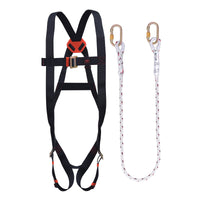
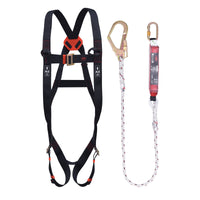
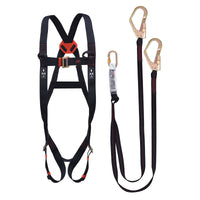
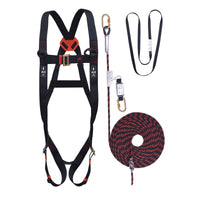
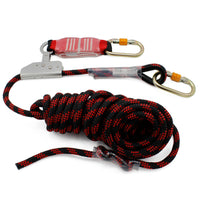
When working at height, you must have the proper safety equipment to prevent falls. Many circumstances require fall protection systems to be in place, and It is important to remember that working in an area with a fall risk may not necessarily mean you are up a tower or in a cherry lift. It could mean that you are working at the edge of a deep foundation, the edge of an empty swimming pool, or even the top of a steep roadside embankment.
The core function of all fall prevention and protection devices is to prevent injury from occurring from a fall. Fall safety system components come in many formats depending on the task they are designed for, with a commonality that they all require you to wear a harness.
We are proud to work with some of the best names in the height safety equipment industry. We only supply quality brands that can demonstrate great quality control and have excellent customer service and reputation, ensuring that you, as the end user are well-informed and supported.
Before looking at the different types of fall arrest systems, it is worth getting familiar with the common components used within the range.

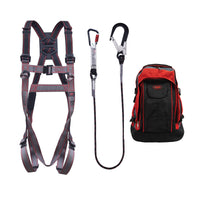
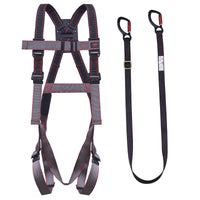
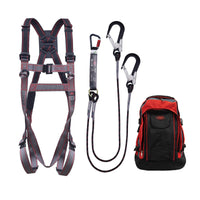
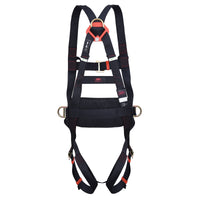
This is the core component of all fall protection setups and attaches you to the rest of the fall protection system. There are several options available when choosing a harness, the most critical of these being the number of attachment points available.
Outside of this, many options are quality-of-life features, such as quick-release buckles, lightweight materials or extra padding.

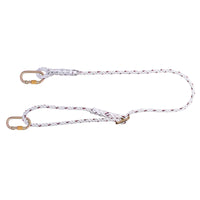
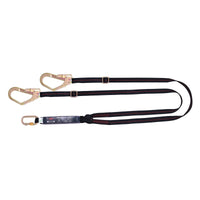
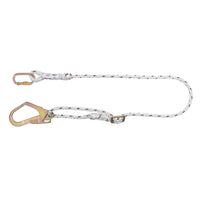
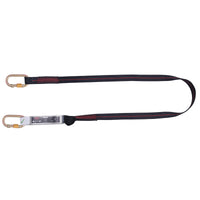
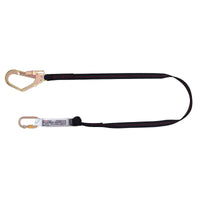
These come in various styles, but generally, they are used to connect two items together. This connection can be between you and an anchor point that can support your weight in the event of a fall or between you and a tool you are using to prevent it from falling on someone if you drop it.
Again, these come in various formats, with some resembling ropes and others resembling woven straps.

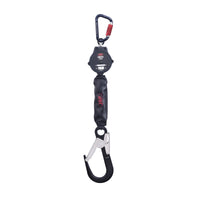
You can use these systems to dispense a wire or webbed strap whilst working at height that you can use to catch or limit a fall.
They come in various lengths and have features that make them useful for specific tasks. For example, some are suitable for horizontal use, whilst others are designed for vertical use only.

Shock Absorbers
These energy-absorbing components come integrated into many lanyards and even self-retracting block systems.
They work as part of a fall arrest system to absorb energy as the lanyard tightens, reducing the risk of significant injury that stopping abruptly can cause.

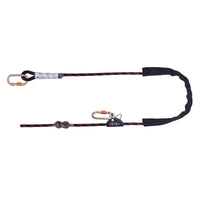
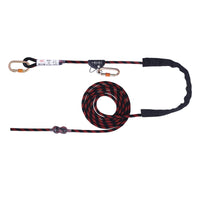
For the most part, these are a type of lanyard that you can use to form an anchor point. They are instrumental if you are working somewhere that does not have a formal anchor point.
They can be looped around a tree and used to form a secure anchor point to connect your gear onto.

These are the components that connect everything. They offer a quick, convenient and secure way to attach a lanyard to a harness or anchor point.
Materials include lightweight aluminium or standard steel. You can also get specialist hooks that attach to structures such as scaffolding.
Who Needs Fall Protection Devices?
When people think of fall protection, they immediately think of workers operating tens of metres up in the air. Whilst these workers do indeed need overhead fall protection systems to prevent accidents, even someone working on a garage roof is at risk of injury if they were to fall.
With this in mind, it is always worth considering what steps you can take to remove the risk of getting to an area where you can fall down any distance; as mentioned above, you may even be working at ground level next to a deep excavation. In these situations, you still need a safety line and restraint if you are working near the edge as part of a restraint system to prevent falls.
You may have the right equipment, but if you are not using it correctly, you may unknowingly be putting yourself in danger with an elevated false sense of security.
Minimum Free Space Required
When setting up, you must always consider how much space you have to fall into. In brief, you need to consider how long is your entire setup. This includes;
- How long is the lanyard when under tension?
- How long the shock absorber is when extended (if you are using one)?
- How far your feet extend down from the anchor point in use on your harness?
- And of course, an allowance for some “safety clearance”.
Fall protection systems are seldom used in isolation from other PPE, so if you need any other PPE, we have what you need.

We have a great selection of eye protection available, from basic safety glasses to over spectacles and integrated eye protection systems.

If you work in a dusty environment or with cutting and grinding equipment, you will need respiratory protection. Find our full range, including full face masks, here.

We have a massive range of quality helmets and bump caps suitable for all work environments.

We provide full face shields for various purposes, from mesh visors for arborists to specialist visors that protect from arc flash for electrical applications.

If you work with loud equipment, you will want some hearing protection. Find in-ear plugs and over-ear defenders in our hearing protection category.
 FREE DELIVERY on qualifying orders
 sales@startsafety.eu / +359 (0)87 8810774
 Wholesale Prices